CPA Experts San Antonio AlternativeThe first hour is about last month.
The first meeting was all brochure from the start, and you wanted last month looked at before anyone named a fee.
Ask about the hour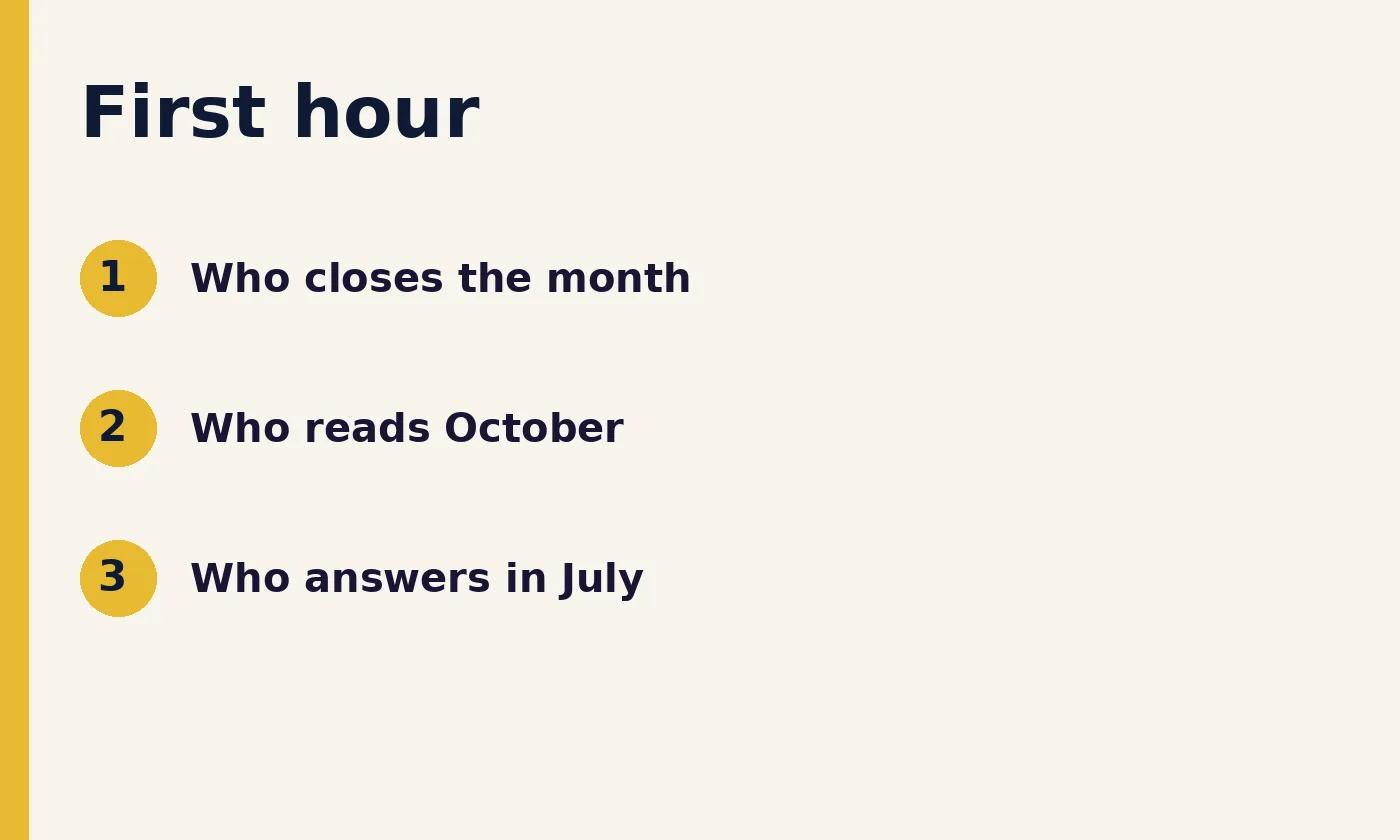
What the first hour actually covers
Bring the newest month you already trust, even if the month after it is still a pile. We read the deposits and the bills, and we say whether a return can be written from that set.
Skip the software tour and skip the speech. You should leave knowing which months still disagree with the bank, and whether the cover in your hand asks for a signature this practice does not give.
Questions worth asking out loud
Ask who closes the month and who prepares the return. On this practice those are the same people. Ask where payroll runs. The honest answer is on the provider you already use, with the wage file stood up so the books can read it.
Ask what happens if the cover names an audit, a review, or a compilation. The answer should come in the first hour, not after you have sent a year of statements. We name a firm that can sign, and we keep the months.
A show on the river, and the deposit it leaves
The open-air stage at the Arneson River Theater faces the water. A ticket night still produces a deposit, and that deposit belongs to the night the show happened. We put it in that month when we close the books you share.
The hour has that same plain habit. A place you love still has a receipt. The receipt has a month. The month has to match the bank before anyone drafts a return from it.
What you should hear before you leave
You should hear a count of open months, a plain sentence about the cover, and a figure for the work that follows that count. You should not hear a promise about a tax result.
If the year is already behind, the price follows the months that still fight the statement. A monthly rhythm starts after those months are closed, or the work is turned down. The call is where that choice is spoken, before any date is set.
What to bring so the hour is useful
The last statement you believe, the last return you filed, and the letter if a letter is why you called. A login can wait. The paper you can hold is enough to start.
If payroll sits on a provider, the name of that provider is enough. We do not need the password on a public form. A bank password and a copy of a return do not belong on the public form, and the form does not request them.
How the hour actually runs
Start with the month you last trusted, and stay there until both of you can say whether it matches the bank. Only then name the months after it. A fee spoken before that count is a guess, and a guess is how a first meeting turns into a performance nobody scheduled. The cover comes third, and only if a packet is why you called. Payroll is a single sentence after that. The provider you already pay people from keeps producing payday, and the wage file is stood up so the books can follow it.
What you are buying is that order. You are buying a look at last month before anyone opens a software screen. You are buying a count you can repeat to a partner on the way back to the shop. You are buying a sentence about the cover that you will not have to translate a week later. A ranking of other firms is outside the hour. A tour of menus is outside the hour.
What you should be holding when you stand up fits on a notepad. The count of months that still fight the statement. The sentence about the cover. The figure that follows the count, or a clear stop if a monthly rhythm would be starting on a pile. If one of those three is missing, the hour did not finish, and you can say so before a second meeting is booked.
People who have run an hour in this order describe the relief in ordinary language. They knew which month was the subject. They knew the figure was tied to a count they watched someone make, rather than to a number offered before the statement was opened. They also knew a password would stay off the public form. A login waits until a written engagement exists, and the records come back if either side stops.
This page owes you that order even if you never book a time with us. Take it into any first meeting. Ask for last month. If the reply is a story and never a deposit, you already have your answer, and the rest of the hour can be short.
One more thing the hour should settle is the shape of the next month, not a slogan about partnership. If the open months can be closed, you hear the day the close will land and what the page will contain. If they cannot, you hear that a monthly rhythm would be starting on a pile, and the work stops there. Either sentence is a useful way to end an hour. A vague offer to stay in touch is not.