CPA Experts San Antonio AlternativeThree questions, then the month.
Before anyone is hired, the conversation usually settles on three questions, and the useful answers are short.
Open the questions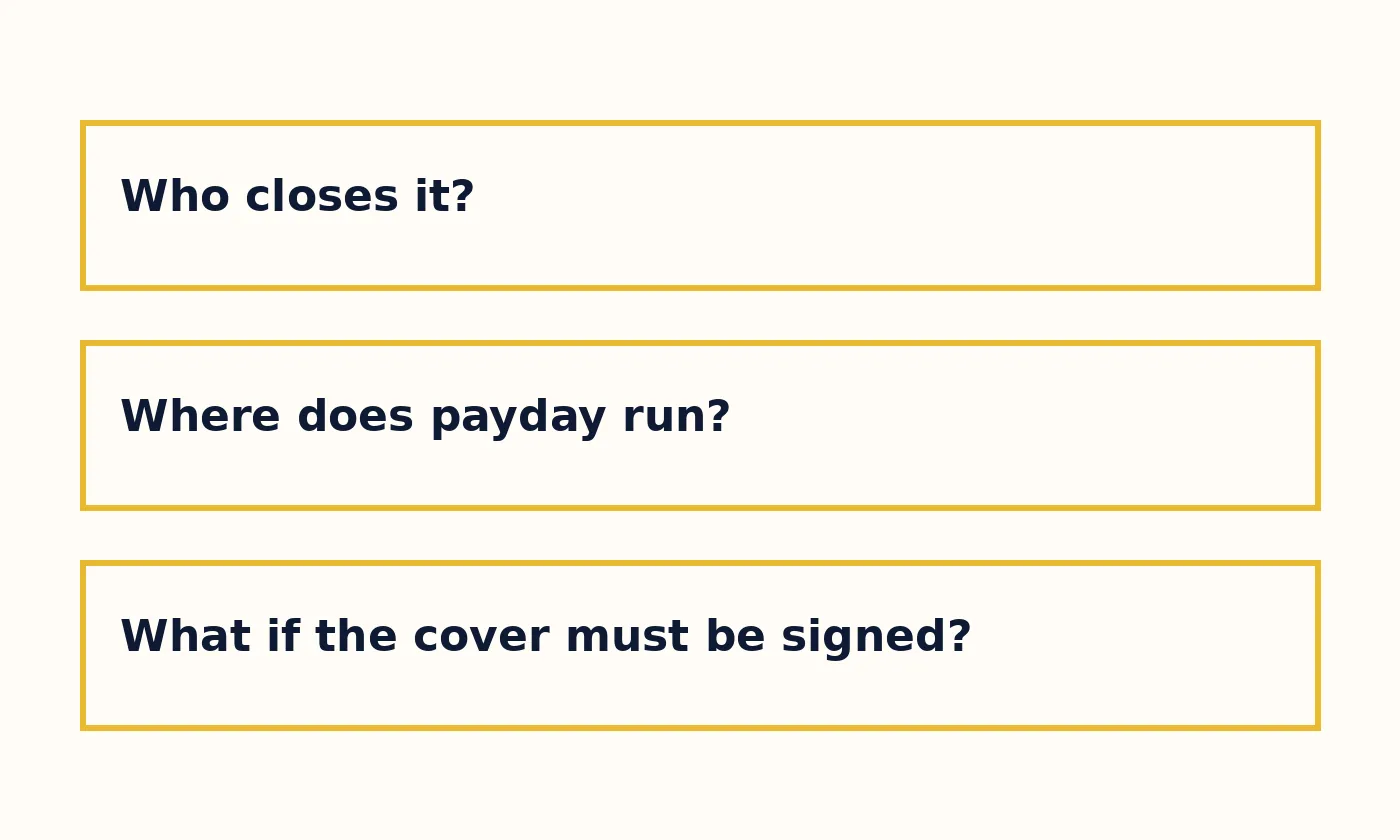
The three questions that decide the hire
The first is who closes the month. We do. The second is where payroll runs. It runs on the provider you already use, and we set the file up so the wage accounts follow it. The third is what happens when a bank or a buyer asks for an audit, a review, or a compilation. Assurance signatures are someone else's work, and the first hour names that kind of firm.
If those three answers are muddy, the rest of the conversation does not matter yet. Price comes after the count of open months, not before.
What people also ask, and what we answer
People ask whether the personal return and the company return can disagree about the same profit. They should not. We draw both from one closed set of months.
People ask whether a late year can be made painless. It can be made clear. The price follows the months that still fight the bank. A promise about penalties is not something we make. Relief is a conversation with the agency, and the outcome is not ours to announce.
People ask what to send before the first call. The newest statement you trust is enough. Send the login on the call, never in this box.
Pearl, and a Tuesday that still has to close
Pearl is the old brewery grounds turned into a place people walk on a Tuesday. That Tuesday walk is one Texans recognize without a guidebook. A shop on a walk like that still has a Tuesday deposit, and Tuesday still belongs in the week it was earned.
The questions above are how you find out whether someone will say that out loud, or whether they will talk about the walk and never open the month.
How you can tell the hour was honest
You leave with a count, a sentence about the cover, and a figure tied to that count. You do not leave with a slogan. If the year is already behind, you hear that the monthly rhythm waits.
Bring a letter if a letter is the reason you called. We read the cover line first. The work either includes an answer we can give, or it includes a name of a firm that can sign, and you hear which one before you send a year of files.
The questions that show up once the first three are answered
People ask whether we will rank the firms in town. We will not. A ranking would be a performance, and the useful thing is a look at your newest month. If you want a list of names, that list is not a thing we publish. If you want to know whether last month matches the bank, that is the conversation.
People ask what to do when the paperwork uses the words audit, review, or compilation. Read the cover before you read a price. Those three words ask for a signature this practice does not give. The months and the return can still be prepared here, and the first hour says which half of the ask is which. The longer version of that limit lives on the page about a signed report.
People ask who will still talk about a month in the middle of summer. Ask it about one month, never as a slogan. June is the usual answer in July. A strong reply names the last month that already matched, then walks the lines after it. A weak reply promises to get current and never produces a count. The July page is that question written out.
People ask how the meeting happens. It happens on a video call, with the books in a folder both sides open, and the time is chosen on the calendar after you name the month. Whatever the week looks like, the close keeps the day we named when we started. You do not have to carry a box of paper across town to begin.
People ask whether the spouse's return can tell a different story about the same profit. It should not. Both returns are drawn from one closed set of months, so a deposit cannot be income on one and invisible on the other. If the two drafts disagree, the disagreement is a line we can point at, and March is a kind month for that comparison because there is still time to ask why.